I am writing a series of related profiles, to be published in this space. This is part I. Part II will examine the ever-changing legacy of Ulysses S. Grant, from Mount Rushmore president to the dregs and, now, to mid-table. Look for “Ulysses S. Grant in the KKK’s America,” coming in November.
I visited Ulysses in bronze and the wider Grant Memorial in the summer of 2019. Sorry about the distortion. I am a lousy photographer. Here’s what’s important. Real estate records, found in the Office of Tax and Revenue, reveal that Ulysses and Julia Grant once owned a townhouse that sat on this very spot, bordering on Constitution Avenue. Washington remembrance misses this monumental fact.
Here’s what went down. After Julia Grant’s death in late 1902, the Grant offspring performed an unusual transaction. None of the four lived in the townhouse. In fact, they went against the final will and testament of their mother. They didn’t sell. Rather, they donated the property to what is known today as the Architect of the Capitol, or the federal agency tasked with Capitol development, maintenance and remembrance.
I am working on a theory. Perhaps the Grants donated the property in an effort to rehabilitate their mother’s historical legacy? This theory contains a leap in thought. Julia Grant lived a revered life. She was the first truly renowned first lady. The Julia Boggs Grant Salon became the most sought-after invitation in the 1870s. Only the most fortunate got to show up (and out) in the Red Room of the White House on the first Monday evening of every month. She never, however, freed her property, or those slaves who saw to the family’s wants and wonts. The Grant children grew up with slaves as their caretakers. Perhaps they felt damn guilty, and perhaps they realized that impact on their mother’s future legacy?
In the summer of 2020, when reaction to the CoronaVirus created full lockdown mode most everywhere, someone hung a sign just below Ulysses in bronze. “It Could Have Been My Son!!!” the sign read in black and white, and then directly below, “BLACK LIVES MATTER”
Do you know what first caught my eye? Capitalization and punctuation. The three exclamation points ending the first sentence. The lack of any punctuation at the end.
Let’s dig a little deeper, although it is high time to rethink grammar when we talk about slavery and other forms of total decimation. While that first sentence speaks to police brutality, let’s track back to certain African hotspots, anywhere from the 16th century to the 19th century, with the Atlantic slave trade in full tilt and well over 10 million enslaved people shipped to these shores. That sentence could have been uttered by an older mother, after watching her neighbor’s child ripped away by an African state, in conjunction with a European power, shackled by slave traders, force marched to the slave coast, held in dungeons before passing through the “Door of No Return,” then enduring that horrific Middle Passage, and arriving in any one of numerous ports in the U.S., from New Orleans to Charleston to Savannah to New York.
Yes, you read that right! A survey in the London Times in 1860 ranked the New York Harbor as the number one slave market in the world. New York! Where slavery had been outlawed since 1827!
That first sentence has tentacles to this advertisement.
Charleston, South Carolina, 1769. An auction selling “prime, healthy” property called “NEGROES.” Note the capitalization.
In standard writing, from newspapers to magazines to books, that referent for Black people used the lowercase. Only in 1930 did capitalizing the first letter become the standard. 1930, people!!!
Relatedly, the first Black person to outright win the governorship of a former Confederate state occurred in 1990. Douglas Wilder became governor of Virginia. 1990!!!
From 1769 to 1930 to 1990 to 2020. While the sign didn’t last long below bronzed Ulysses, I did a Google search. Never does punctuation appear on any BLM signage. It’s like the organizers are giving the middle finger to English grammar, and with good reason. English grammar is inherently racist. Why do we capitalize the names of slavers, and places where slavery flourished? Should George Washington, for instance, gain capitalization? Should Mount Vernon? Should Charleston? Should the New York Harbor? Perhaps the Grant children understood something of this when they sold the townhouse?
From that penthouse slaver named george washington to a successor, over 225 years later. I know how Donald Trump, in the last year of his presidency, reacted to that sign. Perhaps some backstory is in order here. In June of 2019, I received an invitation in my mailbox. On official letterhead, with the presidential seal and that imposing eagle above all else, the invitation read: “The President and Mrs. Trump request the pleasure of your company for an evening of book talk. Date to be determined.”
“Book talk” referenced my most recent work at that time, as some months earlier I’d published Satan’s Synagogue. Part historical text, part fictional story, an odyssey – or what I call a faux history – Satan’s Synagogue plays with the idea of history. There are traditions out there – Homer, Strabo, Josephus, Solzhenitsyn, Vonnegut, Tom Robbins – where story falls to the wider pastiche of the times. To read and understand these traditions is to value the canvas created.
Incredibly, Satan’s Synagogue became hot news at the Trump White House. This news took weeks for me to digest. I mean, the Trump family reads?!?! And then, the Trump family reads Josepher?!?!
Note the punctuation.
With the shock weakening, gradually, I decided to make the journey to TrumpLand. I didn’t follow the straight route. I wanted to pursue a pivotal question of history never adequately answered. Why did President Lincoln travel to battlefields during the Civil War? Records indicate that he went to Antietam, Gettysburg, Petersburg and Richmond, in order, while those killing fields still smoldered. What was he seeking?
I made my way to TrumpLand by bicycle, sort of at the speed of Civil War armies moving to the next bloody engagement. I made stops at Civil War sites. I gave that ride a title: “A bicycle tour of Civil War Land Central (and peripheral).” That ride, and that historical question asked of Lincoln, formed the central narrative to TRUMP-A-LINCOLN-A-LAGO (TALL). At the time, I didn’t realize that TALL would morph into a series. WHAT WE TALK ABOUT WHEN WE TALK ABOUT (GRANT) BLACK forms the second of a three-part ramble of a road story, movie, odyssey.
In TALL’s front matter, I included a timeline of my bicycle tour. On Day 8 (of 25), I visited the Grant Memorial in front of the Capitol Building. Here’s what’s important. Bronze Grant on his bronze horse – named Jeff Davis – faces west. Notably, jefferson davis hated the shortening of his name. he thought of himself with the pomp, circumstance and authority of that penthouse slaver named thomas jefferson, and nobody shortened the jefferson family name. Or, decapitalized it, either.
General Grant shortened the given name. Out of spite? Irritation? Sardonic wit? Did Grant do irony? The historical record rejects the idea. Grant did direct, unadorned, Ohio talk. He was born in the river town of Point Pleasant, with the slave state of Kentucky on the other side of the Ohio.
Here’s what the historical record reveals. When Grant’s Army of the Tennessee seized the massive plantation of joseph emory davis just south of vicksburg (1863), Grant went to the stables. A stunning black horse caught his eye. He would later purchase the animal from the army. He would add Jeff Davis to his personal horse barn. Later, he would bring Jeff Davis to the White House. (Or, maybe white house is more applicable?) He would board the horse, and other favorites, in the livery just to the west of white house grounds. In those days, there was a horse-racing club on 17th Street, called the Washington Jockey Club. President Grant was a notorious carriage racer. Today, that part of the street houses the Office of the United States Trade Representative, with a Starbucks next door. Because traders need coffee.
Grant owned many horses during the war years: Jeff Davis, Egypt, Cincinnati, Methuselah, who didn’t live into his 969th year, and Kangaroo, just to name a few. But here’s even more of what the record reveals. The plantation owner named joseph emory davis had a (much) younger brother. History knows him as jefferson davis. In the 1850s, davis emerged as a key spokesman for the south in the united states senate. he had access to the men living in the white house. franklin pierce, a foe of the abolitionist movement, even brought davis into his cabinet. Secretary of War davis advocated for the passage of the Kansas-Nebraska Act. That legislation repealed a key concept of the Missouri Compromise. Citizens of territories, rather than congress, would now be allowed to decide their slave status.
The War Department Building lived just to the west of the white house, with the livery just to the south. davis, liked Grant, owned many horses. But he typically rode his favorite to his office in the War Department. That horse was named Jefferson Davis.
Some men name their sons after themselves. davis went with his horse. And a son. he was Narcissus personified.
Eventually, davis returned to the senate, where he would work until the spring of secession. During those years, jefferson davis rode Jefferson Davis to the capitol building.
Note the capitalizations, man, horse, place names, governing bodies. Those pieces of legislation should be decapitalized, too. The truth is, the psychological effect of slavery lives large in our culture. Until we can come to some sort of reckoning, a unification based on equality, our grammar should reflect that inherent prejudice.
Let’s get back to the Grant memorial. The statue of Grant facing west has a universally understood interpretation. Grant faces Lincoln and his memorial on the western edge of the national mall. The universally understood interpretation misses the truer meaning. The direction implies the location of the Grant townhouse. The front door to that townhouse was a step or two removed from the statue. It’s as if bronzed Grant is about to ride into his old home. As one of the great horsemen of the 19th century, Grant could accomplish that feat with eyes closed. Both his and Jeff Davis’s!
By way of jefferson davis – the man, not the horse – let’s segue to Donald Trump and his reaction to the BLM sign. How do I know how Trump reacted? Here’s an anecdote that didn’t make it into TALL. During my dinner with Trump and the first family, the conversation veered toward the BLM. Trump, being Trump, railed at those “cotton-pickin’ squatters. How dare they commandeer federal lands!”
While the exclamation point exploded in my ear, my thoughts went to Trump’s offensive language. Yes, he used “cotton-pickin’” as a stand-in for damn. Not that Trump ever monitors himself when it comes to swearing. The man is profanity unhinged. But the fact that he chose an ugly American referent says something about the man. Apparently it’s better to make a derogatory link to a slave and sharecropper occupation, to belittle those multitudes who were pigeonholed into such difficult labor, than to swear, tamely. Let’s be real. Trump is trump.
But, trump being trump, he completely whiffed on BLM. It took me some time to unpack his meaning. trump didn’t understand that in the modern world, BLM stands for Black Lives Matter. he thought the acronym stood for the Bureau of Land Management. Which it does, too.
Here’s what I realized during my hours with trump. Those movements that heroize the man have their roots in the early postbellum. The proud boys’ noise, the alt-right white supremacy, and the maga thunder all form appendages to the lost cause false narrative.
Note the decapitalization of all organizations, based on racism and overall demerit. There’s a direct line between jefferson davis and donald trump. I don’t know if Kamala Harris owns horses, but if she does, she might consider renaming one after the 45th president of the united states.
Here’s what I do know, for sure. donald trump never rode Donald Trump to the white house.
jefferson davis went to jail. In April of 1865, just hours after the assassination of Abraham Lincoln, the Secretary of War, a fascinating man named Edwin Stanton, put out a reward on davis’s head. $100,000 for davis! That’s over four million today.
davis spent two years in Fort Monroe. Upon his release, he went abroad. Because that’s what seditionists did, in the traditions of benedict arnold! davis would later receive amnesty from president andy johnson. he would make his return to mississippi.
Flash-forward nearly 150 years. From traders to traitors. From the “Door of No Return” to the New York Harbor. From the Bureau of Land Management to BLACK LIVES MATTER
Note the lack of punctuation. From earlier seditionists to the 21st century seditionist. How is it that donald trump remains a citizen of this nation after the events of January 6th?
From the 45th president of the united states to the 47th. How is it that donald trump can even run for the presidency, or win? What is wrong with our america?
Note the decapitalizations. Ulysses Grant must be rolling over in his grave beside the Hudson.
2DCBWG5 Specimen of wood-engraving – the Prophet Jeremiah, from the painting by Michael Angelo, in the Sistine Chapel at Rome, 1844. Detail from the frescoes painted in the Sistine Chapel by Michelangelo between 1508 and 1512. From "Illustrated London News", 1844, Vol I.
I am up early. I never sleep before a long hike. I’m nervous, busy. I want to be on the road before sunrise. I want to be at the trailhead first. I want to be alone. I spend the night before constantly looking at the clock.
Yes, I own an old-fashioned alarm clock. Big, bright, red numbers. I have to face the clock away from me when I sleep. I even have a smaller version for travel. Both batteries operated.
I get out of bed as the big, bright, red number turns four. I walk the few steps from the bed to the bathroom. I have flown from my home in Brooklyn to my father’s home in Colorado for Thanksgiving – the second Thanksgiving in the Age of the CoronaVirus, or ACV. The consequences of the virus, so authoritative and commandeering, call for multiple capitalizations, or Latin to properly describe the impact. The Latin phrase would be a novus ordo seclorum, or a new order for the ages. I’ve opted for the acronym.
I am unfamiliar with the terrain between bedroom and bathroom. I stub a toe on the bed frame. I hold in my hurt. Though downstairs and therefore removed from my father and his wife, sleeping in a bedroom directly above, I tighten the muscles in my hands into fists, as if that action offers some kind of relief against the pain in my toe. It works, sort of.
I enter the bathroom. I empty my bladder. Miraculously, here in my middle age, I can still make it through the night without a sortie to the toilet. My father tells me that he awakes every three hours to use the bathroom. Simple math then suggests my future: two or three trips during the run of the night hours. I can’t say that I’m looking forward to it.
I brush my teeth. I walk back into the bedroom, careful to avoid the bed frame. I make the bed. I walk up the stairs and into the kitchen, as quietly as possible. Fortunately, carpet covers the floor plan, stairs included. I can’t even hear myself. I turn on a light to make coffee. I trek back down the carpeted stairs. In the guest bedroom, I pack a few last minute items.
I am back up the steps and out the door, ever so quietly, and standing at the rental car around half past the hour. It’s cold. It’s quiet. I look up. An incredible array of stars fills my field of vision, and well beyond. My father lives in a secluded neighborhood at high altitude and it’s relatively dark. Only an outside house light, sporadic streetlights, and the glowing moon, illuminate the surroundings. Fortunately, there are no bed frames to stub a toe.
I enter the car with a bygone model foremost in mind. I don’t own a smart phone, or a mobile phone of any kind. I didn’t map out my route this morning. I steer by the stars. I am a throwback to the 15th century, to the age of seadogs. Maybe an ancestor served as a navigator on board one of Columbus’ ships? As a boy, I placed myself on La Santa Maria, the flagship guiding Columbus and party across the ocean. I always stood high on the central mast, with hand over eye, searching for best shipping lanes. I remember a biography on Columbus. I remember the painting.
In my mind, I pictured what wasn’t there – the height of the masts. In my mind, I climbed the tallest mast. That got me closer to the stars. I could navigate. I had a vivid fantasy life.
I buckle the seat belt and turn on the engine. I throw the car into reverse and touch the accelerator. I have planned out the day, roughly. I have picked a hike that I’ve known since childhood. I know the road to take, basically. Admittedly, the road might have changed since my last visit, some 45 years ago. I figure that I’ll make the necessary adjustments en route.
As a boy, on top of that tall mast above the hull of La Santa Maria, I imagined the storms coming in. I imagined the stars as guideposts, disappearing from view. I imagined navigation by instinct.
Here’s what we know that I most certainly didn’t know as a boy. There were conversos aboard that ship. Columbus himself may very well have been a crypto-Jew. Given his suzerain, Queen Isabella and her pan-Catholic convictions, he couldn’t have been a Jew outside his quarters. Only within, with dire consequences if discovered.
As a boy, I opted for soccer over a bar mitzvah. My parents went along. I was a Jew in skin only. Maybe like Columbus? I didn’t know about Abraham, Isaac, and Jacob. I didn’t put any stock in Moses and Sinai. I didn’t have a Jewish education. I had a public education. But it dawns on me now, as I think about a converso ancestor navigating from high above La Santa Maria. He would become me. I would become him.
I steer the rental car through my father’s neighborhood. I reach inside my pack, beside me on the passenger’s seat, to make sure I’ve packed two pairs of gloves. The rental car thermometer registers the pre-sunrise temperature as 32 degrees, Fahrenheit. I’ve filled my pack with layers of clothing to protect against the winter cold. I have enough food to last the day – a tin of sardines, apples, a mixed bag of nuts, water. I have a plastic fork so that sardine oil won’t stickify my fingers.
I reach a main road. I am unfamiliar with the terrain. I grew up in suburban Denver, some 10 miles to the north. I wouldn’t know that neighborhood anymore. A friend from that childhood street tells me that everything has changed. The world we knew is gone.
I turn onto Interstate 25, northward. It’s weird, about ten minutes later, to drive through that area of town from my childhood. The street names sound familiar but the landscape speaks to modernity. Back in my childhood, during the long run of the 70s and a healthy chunk of the 80s, I-25 was a division line. West toward the Rockies, there were scattered neighborhoods and wide tracks of land, undeveloped. There were working farms. There were horses. There were unpaved roads.
East toward the plains, there were miles and miles of open space. There was, seemingly, a view of Kansas. Only the horizon impeded the sight lines. There’s nobody on the roadway on this early Saturday morning. I drive alone through south Denver. There was a time that I routinely made this drive, from suburban Denver in the south to southern Denver in the north. My parents divorced in the mid-1970s and my father took an apartment near the home. Eventually, he took an apartment in southern Denver. As a teenager, I used to make the drive to my father’s home, with my younger sister in the passenger’s seat. I don’t remember my feelings around that drive. My childhood friend tells me that he hated that trip. That trip took me away from him. We were inseparable, playing basketball on the driveway until bedtime – except, of course, when I went to my father’s apartment. My parents opted for joint custody. They split the week in half.
North of Denver, I veer onto Route 36. That roadway reaches into Boulder. I don’t know the town. I didn’t go to college there. I never became Boulder-centric. My childhood image of Boulder revolves around unpaved roads, Jeeps everywhere, the red roofs of the university, the flatirons west of the highway, an outdoor Shakespeare festival, held every summer. In my memory, my mother took me specifically. Maybe my two sisters were in the car? I specifically remember watching Julius Caesar under the stars. I think I became a critic that evening. Shakespeare kills Caesar early in the third act. The act goes on ad nauseam. The fourth and fifth acts follow. Shakespeare really blew it there. He lost his audience midway through.
I remember my reaction to the terrible storytelling. I stared up at stars. I put myself at the top of a mast, with a view of what was out there. I dreamed of navigation.
Here’s what I remember from those family drives to the trailhead, direction-wise. In southern Boulder I will exit the highway. I am looking for the name of a road with Canyon in it. I remember that much. I am surprised that I remember that much. I didn’t drive when I last made the trek.
The sun makes its appearance known, loudly, shockingly. The sun is a type A personality. So forceful and all-knowing. So commanding. So domineering. I know this: when I find the road with Canyon in its name, I need to turn left, or west, away from the sun. For that, I am thankful.
There it is – Boulder Canyon Drive. I exit the highway. I take a left. I turn down my rearview mirror. The sun disappears from view, but I can feel the warmth on the back of my neck. Boulder Canyon Drive does as advertised, snakes up into the canyon. Some 20 miles later, I reach the town of Nederland.
The evening before, as my father reminisced about hikes our young family used to take in the Boulder area, he voiced directions. Hang a right at Nederland and you are on the road to the town of Ward.
If the directions sound simple, I encounter modern-day enterprise. Nederland has changed, radically. Nederland has become a tourist destination. That means traffic. Rather than an intersecting roadway where Boulder Canyon Drive meets the town, there’s a traffic circle. There are all sorts of ways to go.
Maybe this is what really happened to Columbus and the navigators on La Santa Maria? Maybe some converso, high above the ship on the central mast, saw an oceanic traffic circle? Maybe, as the ship entered the circle, he shouted out the word to exit. What language was spoken on that ship? The Spanish of Queen Isabella’s kingdom? The Italian of Columbus’ heritage? I will tell you what language wasn’t spoken – the Ladino of the converso
. La Santa Maria didn’t remain in the circle long enough. If Columbus had plans to reach the East Indies, as history tends to record, they shouldn’t have exited early in the circle. They exited.
I enter the circle. Instinctively, I pass the first right. I don’t know. It just doesn’t feel right. In the mountains, instinct serves as ultimate guide. As a hiker from a very young age, I am very instinctual. I take the second right. It’s some 10 miles from Nederland to Ward on a roadway called Peak to Peak, but it’s a good five miles before I have confirmation that I’m on the right road. A sign tells of the approaching town, and the turnoff for Brainard Lake. That’s where I’m bound.
I have a recollection. When I first discovered Brainard Lake, age six or so, I played a mind game. My name is Brian, or a misspelled variant of Brain. Add the last three letters to Brian – Brianard. The name struck me. Brianard, Brainard. Brainard, Brianard. I used to repeat the wording again and again during the hike.
I also used to tell myself stories. I hiked to tell myself stories. I didn’t know then that I’d become a writer. I only knew that I felt at home in one place – storyland, fantasyland – with the Colorado Rockies serving as setting.
Five decades later, what has changed? The Colorado Rockies remain my storyland. I still hike to tell myself stories. In fact, I am writing this story as I hike the Pawnee Peak Trail, near the end of November 2021.
I am 54 years old. I only feel truly at home when hiking. I have a rich fantasy life. I had a rich fantasy life when I first did this hike, some 45 years ago. What story was I telling myself on that first hike? How was I able to deal with the interruptions, as my older sister pushed me, accidentally or otherwise, or as my younger sister called out to me to observe come cool ground creature? She was into microbes at the time. She thought she could spot them with the naked eye.
When my father, a pediatrician by orientation and trade, brought home his microscope from the office, it was my younger sister who showed the most interest. “Brian,” she would say, “come look at the microbe.”
She loved that word, I remember. She repeated it again and again. Brainard, Brianard.
I wasn’t into microbes, or the ground-bound creatures on the hiking trail. I was into stories, the feel of words, their intersections and connections. Brainard, Brianard.
My present-day self, remembering back to that first hike on the Brainard trail, puts both of my parents in the scene. Were they? My father holds a photograph of his three children on the Brainard hike. We’re a few years older than we were at the time of divorce. My mother isn’t in the shot. But neither is our beloved dog, a collie named Ruffie, and he had to have made the hike. Maybe Ruffie was no longer with us?
I don’t remember a happy marriage. I don’t remember joy between my parents, camaraderie, laughter, support. I remember screaming and yelling. I remember doors banging in relentless frustration. I remember nasty lawyers. I remember my father moving out of the family house. We ate matzah as we moved my dad to a nearby apartment. I liked to cover the matzah in butter and strawberry jelly. Mainly I ate the matzah to eat the butter and sweet preserves. The matzah was a delivery system. Still, the matzah suggests the date of divorce: springtime.
My buddy from the street helped us move. Did he recognize what he was losing? I would become a part-time resident of the old neighborhood. We would become part-time friends. I never made a friend in any of my father’s neighborhoods. I didn’t venture out. I clung to my dad. In my recollection of that move, my friend didn’t eat the matzah. He wasn’t a crypto-Jew.
When my parents divorced, I turned to a television show for support. Star Trek became my therapist. The year was 1976, or so, and the original series was in rerun. Every weekday afternoon at four, I flipped on the television in my mother’s living room. I put myself on the Enterprise, in the place of Captain Kirk. I toured the galaxies, always on adventure, navigating from the captain’s chair on the bridge, making fateful decisions, somehow escaping from impossible scenarios. I watched the show with my favorite stuffed animal, a monkey. I thought of the monkey as a tribble.
Captain Kirk was the ultimate loner. I’m not sure those who served on that ship ever truly understood his psychology. He wrapped himself in himself. I identified.
I remember a conversation I had with my father shortly after he moved out of the family home. This is important, I think. This history maps out my psychology at that time, and now.
Let me correct. He remembers the conversation. He tells me the story on Thanksgiving, the first time we’ve seen each other in two years given the ACV. My father is on the verge of his 83rd birthday. His memory is strong. He remains a very astute psychological observer. We still go hiking together. Let me first offer some background. When we were a young family, my father broke away from pediatrics. This couldn’t have been easy for him. He had a family to support – two homes, one of which he didn’t live in. His identity was wrapped in the study and practice of pediatrics. He was pediatric-centric. But my father wanted to become a pediatric psychiatrist. He quit his job and entered a program in southern Denver. He left his apartment in suburban Denver and took an apartment in southern Denver. He moved farther away from the family home.
Let’s get back to my conversation with my dad, as he remembers. In his recollection, we were walking the neighborhood. One block removed from our street, to the east and our view of Kansas, there was a big hill. In my mind’s eye, we were walking up that hill. Maybe we were walking down? My father remains directionally challenged. Like the navigators aboard La Santa Maria? This is my dad speaking, as he remembers the conversation from some 48 years ago. Dad, he has me say? Dad, are you going to move to another state?
A father of another friend has just moved to California. I don’t remember much about my friendship with that boy but I can tell you this: he felt abandoned by his dad. I did, too.
If abandonment is your true marker and you’re a kid of the 1970s, you turn to Star Trek. You put yourself on the bridge of the Enterprise. You identify with Captain Kirk. You imagine your stuffed monkey as a tribble.
It doesn’t go unnoticed now. I had two Kirks in my life. Kirk on board the Enterprise, and Kirk my buddy on the street. Kirk did not identify with Captain Kirk. He did not watch Star Trek. He didn’t need the storytelling for psychological support.
In my father’s recollection of the conversation, he thought that Kirk’s father had moved away. He is wrong. In my mind, Kirk’s father was entirely dedicated to his wife. Kirk’s father, in fact, quit his first love, coaching basketball, to enter the field of real estate. The family of three boys needed a better financial structure. He did what he had to do.
My father quit his pediatrics practice to enter a psychiatry residency. The residency paid him peanuts. I remember my mother, constantly nagging my father for more money. Maybe I’ve used the wrong word? “Nagging” presents my mother in the wrong light. “Nagging” makes her irritating. My mother needed a better financial structure.
Kirk’s father quit his coaching gig for real estate. Kirk, who’s worked in the real estate business for years, now volunteers as a basketball coach. My father did not move to another state. But let’s spin this history forward. My father soon quit the psychiatry residency. He realized, or so he tells me now, that he didn’t want to only tend to children in deep developmental distress. He wanted to tend to healthy babies, too. He didn’t mind the cough, or muscle ache. He couldn’t spend his entire life involved in adversity. He had a novus ordo seclorum. Of course, he had a novus ordo seclorumwhen he first quit pediatrics to enter the psychiatric residency program. I suppose we have novus ordo seclora all the time.
He couldn’t find a job to re-enter the pediatrics field. He had a family to support, two roofs to pay for, one of which he didn’t live under. He took part-time action. I remember the incredible stress, on both parents. I remember my mother’s nagging. Then he found a job, and all seemed okay. But that job took him to Colorado Springs, a good hour south of southern Denver. He took an apartment in northern Colorado Springs. I went to that apartment only once. My father lived there for a good year. It was like he had moved to another state.
How did I deal with the abandonment? I watched Star Trek. I put myself on the bridge of the Enterprise. I identified with Captain Kirk.
Let’s get back to my present-day hike. I’ve left out some details. A good hour into the drive, I arrive in Boulder. It’s a Saturday, and the Boulder police have blocked off the highway. I have to exit. As detailed earlier, I don’t know Boulder. I was never Boulder-centric. I start to feel a little anxiety. The sun is just climbing into view and I’m somewhat lost.
Let me amend. Not lost. If you can guide by stars, you are never lost. Unless a major storm appears. There was no storm that day.
Almost immediately, I find the turn onto Boulder Canyon Drive. My anxiety drops away. What is anxiety anyway? Captain Kirk traveled into the unknown. He seemed entirely willing. Maybe that’s why the show speaks so loudly so many years later? He crushed anxiety.
In the small town of Ward, past the Boulder Canyon, past the traffic circle in the town of Nederland, past the ten miles or so on the Peak to Peak roadway, I turn off into the Brainard Lake parking lot. Brainard, Brianard. Nederland, Netherlands. I am assuming that the founders of Nederland, Colorado came from the Netherlands. I am assuming that the town was founded in the 19th century, post Civil War, as a trading outpost. The first transcontinental railroad was only a few miles to the north. I am assuming that the founders made the spelling change because the locals couldn’t pronounce the original name. The hard d rather than the crazy th made the pronunciation so much easier.
My buddy from childhood struggled with a speech impediment. He had a stutter. He really struggled to pronounce the letter k, among other sounds. But conditions in his family home exacerbated his struggle. Five people lived in his family home. Four of them used the k sound in their names.
Kirk and I meet for lunch during my trip to see my dad. We haven’t seen each other in decades, but we immediately fall into a great comfort. I realize that I miss him dearly. He knows me, unlike any other. He doesn’t know the details of my adult life, but he knows the boy who became the man. He knows the navigator who became the writer.
He tells me, during that lunch, that I made him feel “okay,” even while he struggled with his stutter. I made him feel like a normal kid.
I have this realization. Kirk taught me patience. Kirk taught me humility. He was the greatest athlete I’ve ever seen. He was a gazelle when he ran. So fast. So agile. So elegant. But the speech impediment made him feel small, awkward. He felt muted. He didn’t feel muted with me. I gave him the space to work out his words. But you know? He gave me a gift. I learned how to listen.
I immediately encounter a roadblock. At Brainard Lake, there’s a lower parking lot and an upper parking lot, some four miles up and down a hilly road. The upper parking lot leads to the hiking trails. But winter rules are in play. A barrier blocks all traffic from reaching the upper parking lot. Hiking the road is the only way in.
I sort of shrug my shoulders at the difficulty, just as Captain Kirk would. It just means the hike will be longer, by a good two hours. I step out of the car. I begin. It’s cold, hovering in the high 20s. It’s windy. The sky is cloudless, a vibrant Colorado blue, a transcendent light refraction. The moon glows. The stars seem to touch the mountain peaks. I start the hike at something like 11,000 feet in elevation.
I wear a bright orange parka, two pairs of gloves, a ski hat, running shoes. I can’t wear hiking boots due to arthritis. My shoes and socks become wet almost from the first step. There’s snow everywhere. The snow is hard packed, deep in some places.
There’s nobody around. My mind flashes to the flight, from just a few days before. Every seat was taken. I sat in a middle seat, in the very back of the plane. Both my neighbors pushed in on me. A constant parade of passengers used the lavatories. I felt squeezed, tourniquet tight.
Suddenly, I have elbow room. I have acreage. I have isolation. I have quiet. Well, let me amend. I don’t have quiet. Nature is loud. But I am alone in a humanless expanse.
My mind flashes to another scene. I’m suddenly transported back some 35 years ago. Back to where I stand now. Earlier I wrote that I hadn’t been to this trail in 45 years. In fact, I now realize that I came here at the tail end of my teens. I came here with my one true girlfriend. I was immeasurably in love with Lisa. She was immeasurably in love with me. When we broke, five or so years later, so did the immeasurable. I have never been married. I don’t have children. There have been other women, none of them real partners. Lisa was it.
We were years away from our break when we drove the route to Brainard Lake. Notably, we went around the Thanksgiving. In my recollection, there was snow everywhere. The snow wasn’t hard-packed. A storm had just dumped on the area. The hiking trails were not trespassable. There was nobody around. We sort of hunkered down in the isolation of the mountains. Maybe the upper parking lot had been blocked off? Maybe winter rules were in play? Maybe we hiked through the snow from the lower parking lot? I remember the lake. Completely frozen. I remember boot skating on the surface. I was 19 and I didn’t have arthritis. I remember the incredible joy, the freedom.
The year was 1987. The year now is 2021. Lisa lives 3,000 miles away. We talk on the phone around our birthdays. It’s easy to fall into a great comfort. An hour into my hike on the road, I reach Brainard Lake. The name game hits me. Brainard, Brianard. Nederland, Netherlands. The surface of the lake is frozen. I wonder how deep the ice goes. I don’t stop to check. I find the trailhead. I am surprised by the amount of snow. The severe drought has reduced the Colorado snowfall to a coating. Denver, in fact, has yet to see snow this season – a record for the city. But the snow here is hard-packed and plentiful. Other hikers have attempted the trail. I walk in their footprints. It’s really cold. My shoes and socks are wet. My hands, through two layers of gloves, are nearly numb. I hike onward, through a thicket of trees. My mind flashes to that photograph, in my father’s possessions. We were here, some 45 years earlier.
Note the background. There’s snow on the mountainside. There’s a rushing runoff of a river directly behind us. We’re dressed in layers. I’m wearing my favorite Superman sweatshirt, with red arms. My older sister wears pants. She suffers tremendously from the cold. It was a known family detail. There were others. My younger sister refused to eat lamb. I hated peas. My mother wanted to drive a shiny Cadillac. She drove an old Ford station wagon. Eventually the station wagon gave out. She raised what funds she could and bought a used Oldsmobile. A poor person’s Cadillac. I don’t remember her reaction. Her children were thrilled. The size of that car reminded me of the Enterprise.
Note the jean shorts in the photo, cut too high. The style, I suppose, fit the times. Daisy Duke in her cutoff shorts filled a Friday night primetime hour. We would tune in at the end. The Josepher family settled in for the Ewings of Dallas.
Note the light refraction on the three of us. There’s a peripheral darkness. There’s an inner halo. It’s like we’re in some kind of revelation – The Gospels According to the Josephers.
Time has changed the colors and textures of the past. It’s been 45 years since my father snapped the shot. Time has made us all into visitors.
On that hike some 45 years later, I realize that I’ve veered onto an entirely different trail. In the route from the past, a lake connects Brainard Lake, at the bottom, to Lake Isabelle up top. Some surveyor gave that body of water an applicable name – Long’s Lake. The hiking trail skirted the eastern edge for a long time.
Some 45 years later, I’m hiking on a trail significantly above Long’s Lake – maybe 500 feet in elevation. I’m looking down on a frozen lake, surrounded by some shale, surrounded by snow.
My attention goes to the mountain on the other side of Long’s Lake. I have a moment of revelation. Above timberline, I see shale. No snow. The sun hits that mountain face for a good part of the day and the melt is complete. I realize that the same must be true for Pawnee Peak above me.
I hike straight up the mountainside. Leaving behind the trail, packed in snow, but littered with footprints. Trudging up the steep incline, packed in snow, but untouched by footprints of any kind. Breathing hard. My lungs blasting in the altitude gain. I’m used to Brooklyn sea level. Suddenly, I’m nearing 12,000 feet. I play the name game to take my mind away from the gasping. Brainard, Brianard. Brianard, Brainard. Nederland, Netherlands. I’m steps away from the sunlight. I’m hot under my orange parka. I’m sweating under my ski hat. My feet are wet. My fingers are numb.
I reach timberline. I take a step off the snow. It’s my moonshot. I was two years old when Neil Armstrong beamed into our living room. My younger sister wasn’t yet born. The younger version of my family had just moved to Colorado. I am sure we watched that historical sea change, a definitive novus ordo seclorum.
I don’t have memories of watching the moon landing, but I now understand his iconic words. Armstrong wasn’t talking about an incredible breakthrough. He wasn’t talking about progress. He wasn’t talking about the Latin. He was talking about joy and freedom. His age had been freed from the confines of earth. I was free from the confines of snow.
I cross the face of Pawnee, from right to left, if you’re down on the Brainard trail and looking up at the mountain, or the 3 to the 9 on an analog-faced clock. The lakes are below me. Long’s Lake at the 3. Isabelle at the 9. Brainard is out of sight.
I am assuming that Isabelle was named after Queen Isabella of Spain. I am assuming that the surveyors came from Castile. I am assuming that they made the spelling change because the locals couldn’t pronounce the original name. That final la sound is a doozy.
From doozy to dour: look at that face. I get that stern and severe lent an autocratic air. I get that the painter, commissioned by the royals, had to frame the great lady as the ultimate despot – or his body would be burned at the stake. But come on, Isabella. Take a page from the Josepher kids of the 1970s. Give us a glimpse of joy
. Here’s the truth. Isabella followed the guidance of her lead friar and issued the infamous Alhambra decree in March of 1492. Alhambra had one goal: to religiously unify recently unified Spain. Isabella saw the decree as a coalescing. What was the Alhambra effect?
Isabella’s Jews had two choices – exile, or convert to Catholicism. She gave her Jews four months to make that impossible decision. The calendar then suggests that banishment began just as Columbus and his party embarked on their voyage. Maybe the crypto-Jew named Columbus saw his voyage to the new world as a form of exile?
It’s almost impossible to know the numbers impacted by Alhambra, but here’s what we know. Isabella’s lead friar came from Jewish roots. He was a converso!
In Banishment, a migration pattern was born. Isabella’s Jews crossed the border into the more lenient bastions, at that time, of Provence, Piedmont and Genoa. Some put down roots. Some continued the journey, hugging the Mediterranean coastline, coming across the port city of Dubrovnik – where they entered quarantine for a 40-day period, a caution against the bubonic plague, entirely notable here in the ACV – continuing eastward into the Ottoman Empire. A tolerant sultan put out a welcome mat for Isabella’s Jews. The Jews of Spain became the Jews of the Ottoman. The lands of Syria suddenly became Jewish-rich.
But the migration didn’t end there. A secondary migration pattern moved north, into the Russian steppe. Most Ashkenazi Jews trace their origins to Eastern Europe. In fact, Eastern European Jews were once Isabella’s Jews. The Josephers of suburban Denver fall into this category. In fact, we’re Portuguese. Our native language was Ladino. My assumed ancestor, on board La Santa Maria, spoke the language privately, possibly to other crypto–Jews on board. Maybe he spoke the language to Columbus?
Back in Isabella’s Spain, when the Alhambra decree went into effect, the converso population soared. But Isabella wasn’t happy. That dour look defined her rule. She created a police state, known as the Holy Office of the Inquisition. Inquisitors went door to door, rooting out relapsed conversos, known as marranos, or swine. The reference to pig is not lost. The swine were burned at the stake.
Meanwhile, Columbus and his party reached the new world, as they called it. Here’s what Columbus did. He put out a decree to enslave the indigenous population. When we talk about penthouse slavers, with names like Washington and Jefferson, Walter Raleigh and Francis Drake, Columbus belongs in that rung.
Isabella rescinded the order. Why, it’s not like she was some sort of enlightened despot? Maybe she envisioned an entirely new population of conversos? Maybe she saw a vast export for her pan-Catholic convictions? Notably, the Catholic Church would send army after army of missionaries to the new world. Things did not go well for the indigenous population.
Thing did not go well for Columbus, either. The royal court arrested him upon his return to Spain. His punishment for his enslavement decree? He had to walk through a parade of insults on the streets of Granada.
It isn’t lost on me on the face of Mount Pawnee. European explorers, followed by Catholic armies, decimated the Pawnee people. It’s difficult to know the numbers, but the census of 1860 registers 4,000 Pawnee from an estimated 60,000 of a hundred years earlier.
Let’s have one last look at Isabella of Spain.
Dour!
Directly above Lake Isabelle, I look down on ice. I decide to eat lunch. I kick off my shoes and socks. My feet are freezing and the thirty or so minutes in the sun will do my wet shoes some good. I take off both sets of gloves. My fingers are numb. I use the outer gloves for socks on my feet. The second pair of gloves, the liners, basks in the sunshine.
To mentally combat the cold, I play the name game. Brainard, Brianard. Nederland, Netherlands. Isabelle, Isabella. Dour, doozy.
I eat very quickly. A tin of sardines with a fork. An apple. An assortment of nuts, though I munch on the almonds first. A lifelong habit. Gulps of cold water. I fantasize over a thermos of hot coffee. Back when I was a boy, I had a favorite thermos. In my recollection, the screw top was a strange color. Khaki. I loved that khaki-colored thermos. It was my favorite possession, alongside my Superman sweatshirt. Oh, and my Fonzie t-shirt. I wouldn’t let my sisters drink from my thermos.
A bird joins me for lunch. I have seen little wildlife on this journey. Too much snow for ground-bound creatures. Bears in hibernation, thankfully. Too high for moose. The cougars wouldn’t be interested in me.
I throw my apple core near the bird. She flies off with a remarkable prize. I squeeze my cold hands into the liners, now a little warmer from the sun’s glow. Still, I fantasize about hot coffee. What happened to that khaki thermos?
I look down at Lake Isabelle. Are my eyes deceiving me? I see a family, three children with their parents, a collie. They’ve just arrived at the lake. The younger two children, a boy and a girl, are wearing shorts. Daisy Dukes.
Are my eyes deceiving me? At age 54, my eyesight is flailing a bit. I struggle now with corrective lenses, and reading glasses, and contacts drying out my eyes. My optometrist tells me the latter is an effect of ACV. But here, at this spot on Pawnee, I have laser vision. My attention laser-focuses on the family. They remove their provisions from packs. Sandwiches wrapped in aluminum foil. Fruit held in plastic baggies. Loads of napkins. Thermoses. There’s a thermos with a blue screw top. The boy carries a khaki-colored thermos. Weird, I had the exact same model.
The father kicks off his hiking boots. He finds a soft spot on the ground. There’s no snow around. There’s warmth. He stretches out his body. He puts a sweater under his head. He closes his eyes in the bright sunshine.
The older sister walks over to the lake. She doesn’t touch the cold mountain water. She’s the only one of the group wearing pants, and a sweater. She picks up a rock and skips it across the surface of the lake. I count three or four skips.
How many, her mother asks?
Ten, she answers.
What has happened to the boy? Suddenly, I catch a glimpse of his Superman sweatshirt, the red arms. He’s rock-climbing on tall and edgy boulders. He’s incredibly agile, wonderfully balanced, sure of his next move. My laser-focus sharpens ever further and I can peer into his mind. He’s telling himself a story. He looks preoccupied, even as he climbs about. He looks distracted. I wonder if his mind is always away. Processing. I wonder if he plays the name game. Brainard, Brianard. Nederland, Netherlands. Isabelle, Isabella. Dour, doozy.
He looks at me. He smiles a greeting. He can see me? Suddenly, we’re face to face on the face of Pawnee. How did that happen? Suddenly, he’s standing a foot or two removed from me. I shield my eyes with a hand from the slanting sun. The sun’s warmth feels good on the liner covering my numb fingers.
Hi, he says.
Hello, I answer.
Nothing then. Quiet. Well, not quiet exactly. The wind whipping. Echoes of branches being blown around. Rocks falling. Nature is noisy.
I shiver in my orange parka. I wear a ski hat to protect my head. I tug on my socks and lace up my running shoes. I slip on a pair of down gloves over the liners. I shield my eyes from the sun.
He wears cut off jeans, too short. He wears a Superman sweatshirt. He’s sweating. He wears hiking boots. I can’t wear hiking boots, given the arthritis in my feet.
You’re a good rock climber, I tell him. He doesn’t respond. I bet you’re a good athlete, I say. He doesn’t respond. Are you hungry, I ask, after I notice that he’s been staring at the assortment of nuts, residing in a bag on my lap? He says the damnedest thing. You eat the almonds first, he observes. Not as a question. Rather, a statement of fact.
I do, I reply.
I do, too, he says.
We look at each other. I remove the shield of my hand. The sun seems to have shifted. I want to say, I know. I want to say, that will never change. I want to say… there’s so much to say. This is my opportunity to alter his course. I’ve thought long and hard about different paths I would have taken. This is my chance to point him in another direction.
There’s no way to begin. Star Trek forms around a guiding principle known as the Prime Directive. Don’t interfere with the natural development of alien civilizations. Don’t interfere, I mumble to myself. But he is myself. He hears my mumble. Don’t interfere with what, he says. Not as a question. Rather, as a statement of fact.
I smile. I’m not sure why. What does my smile convey? He meets my smile with piercing brown eyes, big and searching. He knows something. He’s way smarter than I thought. I always thought I grew into my smartness in college, when I first opened books, when I made myself available to learning. I always thought I had a revelation, a novus ordo seclorum.
You’re alone, he says.
Yes, I answer.
Have you always been alone, he asks?
There was a time, I answer, looking down on the family at the lake, looking down on sisters and parents and a beautiful dog. There was a time when I had voices in my life, I continue.
What do you have now, he asks?
He’s probing, I think to myself. Does he know what I know? Does he recognize the intersection, the connection?
I have quiet, I answer.
Well, not quiet exactly. In my life in Brooklyn, I am surrounded by noise. The wind whipping outside my window. Street traffic. Incessant car horns. A leaky shower faucet. My upstairs neighbor’s heavy footprints. Life is noisy.
I have this thought then. Let’s spin the rotations of the earth and sun forward some 45 years. Let’s bring the boy to my current age. Let’s put him in my spot, sitting on the face of Pawnee, wearing damp running shoes, an orange parka, a ski hat, two sets of gloves. Let’s also add 45 years to my age. What will I be at age 99? What will the boy, now 54 years of age, say to the man, now 99 years of age, after he somehow reached the face of Pawnee with walking sticks and hip replacements? I can imagine that conversation. You had the chance to tell me everything, the boy, now 54 years old, says. You told me nothing, he says. We talked about nuts, he says.
I always eat the almonds first, the middle-aged man, now 99 years old, says.
So do I, the boy, now 54 years old, says.
Suddenly, he, too, looks down on the young family beside the mountain lake. He sees a boy in a Superman sweatshirt, rock climbing. He sees inside the boy’s head. He sees the stories form. He wonders if the boy plays the name game.
We can hear voices now, the boy and I. Brian, we can hear his parents calling. Brian, we can hear his sisters echoing.
Brianard, Brainard, I say to the boy.
Brainard, Brianard, he says to me.
He leaves then. No words of finality. No last look of understanding. I watch him weave his way down the mountainside. He’s so agile, balanced.
I sit on the face of Pawnee, alone. Shivering in the cold. The Colorado blue overhead, a transcendent light refraction. Snow pack below me. A deserted mountain lake, frozen solid.
I eat the last almond in my bag of mixed nuts. I stand and stretch and decide to hike down to the frozen lake, even if that means hiking back to the car on packed snow.
After dropping 500 feet in elevation, I put a cautious foot on Lake Isabelle. The step feels trustworthy. I take another step. And another. I’m slip sliding across the ice now. I’m skating in joy, freedom.
My latest book, entitled Trump-a-Lincoln-a-Lago, has just been released. Part historical text, part fictional story – or what I call a faux history – the chronicle begins with an invitation. A previous book of mine became hot news within the Trump family during the last year of his presidency. Initially I was surprised – and it wasn’t for the reason that you might think. You might think that my surprise stemmed from the incredibly remote chance of a writer gaining the interest of a president of the United States. That would be understandable. And, indeed, that surprise did hit me, later. My initial surprise formed around a question. Someone in the Trump family reads??? The multiple question marks are mine. I was that surprised.
After an initial period of shock, I decided to make the journey to Trumpland. I didn’t follow the straight route. Rather, I pursued a pivotal question of history. Why did President Abraham Lincoln travel to battlefields during the Civil War? The historical record indicates that he went to Antietam, Gettysburg, Petersburg and Richmond, in order, while those killing fields still smoldered. What was he seeking?
With that question in mind, I made my way to Trumpland from my Brooklyn home with stops at Civil War sites. I traveled by bicycle. The cycling had a forerunning, or a forecycling. A few years ago, I cycled through Judea, Galilee and old Phoenicia, or modern-day Lebanon. I placed “the Tour de Josephus,” as I called that ride, in my Trump-approved book, Satan’s Synagogue. Here, my ride to Trumpland goes by the name, “A bicycle tour of Civil War Land Central (and peripheral).”
In support of the book, I am writing a series of unique profiles. This is part two. Earlier on this blog, I detailed five similarities between Presidents Lincoln and Trump. I’m changing it up. As the title suggests, here’s a list of 5 differences.
1) Let’s begin with upbringing. Young Donald was reared in a house of many jealousies. His father, Fred, co-created the culture. He practiced absentee fatherhood, or dictatorial fatherhood. There was no middle ground. Fred Trump was an empty man, emotionally. He had a psychic wound within, or what I called a psychache in Trump-a-Lincoln-a-Lago. He filled that wound with alcohol, and by making demands. Both trumped up the culture of stability, personal responsibility, integrity. The pun is purposeful. There was no integrity in the Trump homestead.
Fred Trump married a woman with her own psychic wound. Her name was Mary Anne MacLeod. They married in 1936. It’s really no surprise that the Trumps named their first two children after themselves. The Trumps thought that the namings would quench their individual emptiness. No such healing took place.
Mary Anne Trump, or MAT for brevity’s sake, was in a terrible marriage, and she craved attention, affection. She should have had affairs. Instead, she turned her emptiness onto her children. She gave her rapturous attention, harmfully, to her eldest son, Freddy, Jr. In no way could the young Donald measure up to Freddy, in MAT’s eyes. In fact, MAT viewed Donald as a failure. He never escaped that loser mentality. When the Donald uses his favorite insult for others, Loser with a capital L, he is latently identifying himself. Given his complete lack of self-awareness, I’m not even sure he’s cognizant of the psycho-pathway.
It’s entirely notable, though. The culture of many jealousies experienced by the young Donald in the Trump homestead circles over to two key players in the Civil War era. Both Jefferson Davis and John Wilkes Booth lived in homes of many jealousies. Both players had authoritarian fathers, unforgiving and nasty. Both players had doting mothers. The doting proved incredibly destructive. In both cases, the mothers gave their rapturous attention to a child, to the great detriment of their other children. Both mothers lauded that child. Heroization guided the household. Heroizing one child creates an inferiority complex in the others.
John Wilkes Booth’s mother carried the same given name as Donald Trump’s mother. Mary Ann Booth would have gone by the acronym, MAB. It’s a shame MAB and MAT never met to compare psychic scars.
2) Abraham Lincoln grew up with the same kind of father figure as Donald Trump. Thomas Lincoln was a teetotaler in public. He belonged to the Separate Baptists, who swore off alcohol. In private, Thomas Lincoln abused whiskey. Whiskey provoked assault. A young Abe Lincoln was throttled.
But the alcohol abuse was only the half of it. Thomas Lincoln, like Fred Trump, became an autocratic, ruthless home dictator. He instilled fear into his children. Fear became the guiding principle. Like Fred Trump, Thomas Lincoln needed to prove his virility, all the time. Virility masked the emptiness.
Did Abraham Lincoln’s mother, Nancy Hanks Lincoln, become a precursor to MAT, and MAB? Did she focus her love supreme, harmfully, on one child in particular? The historical record struggles to assess. NHL died in 1818. Abe Lincoln was nine years of age. Milk poisoning was the official cause of death, a common conclusion in both antebellum and postbellum America. Unofficially, maybe she died of a bad marriage?
Here’s what Thomas Lincoln did. He went out and replaced NHL within a year. He needed a mother to his children, so he married a woman named Sarah. Notably, Thomas already had a Sarah in his life, his eldest daughter. The younger Sarah Lincoln died a few years later. Officially, she died from complications experienced during childbirth, a common cause of death in both antebellum and postbellum America. Unofficially, maybe she died from feelings of replacement?
But Sarah, the new wife, brought a reprieve to the culture of many jealousies dominating the Lincoln homestead. She brought support to young Abraham’s life. She listened to his struggles. Thomas Lincoln was going blind and the young Abraham had to take care of the farm. The young Abraham hated the hard labor. His stepmother encouraged him to read. His long journey to the presidency, to becoming a Mount Rushmore president, if you believe in that kind of totem pole thinking, began with Sarah. Reading gave Lincoln the chance to observe, to think, to dream, to grow, to create.
Here’s what we know. Abraham Lincoln evolved. Let’s take his views on race as an example. Abe Lincoln was very much a man of his times. He entered the Civil War as someone who leaned white supremacist. He was an abolitionist from the start, never a follower of the slaveocracy, but cultural norms suggested a very unequal racial habitat. There was the vastly superior ancestry coming from white Europe, and there was the vastly inferior ancestry transported over on slave ships from Black Africa. The Lincolns came from England.
Lincoln changed, though. By the time of the peace at Appomattox, he began to conceive of a different American table. He offered Black America a seat.
Here’s more of what we know. During the presidency of Ulysses S. Grant, Black America moved closer to the head of the table. I will save the fuller story for my next book project, entitled WHAT WE TALK ABOUT WHEN WE TALK ABOUT GRANT BLACK, but here’s a little tidbit that speaks volumes. Grant became the first American president to be photographed by a Black photographer. His name was James Presley Ball. Grant invited the Black man to his first inauguration. While parties raged throughout Washington, celebrating the great general’s rise to the White House, Grant sat for Ball in what would become his favorite room, the Treaty Room. That photo has been lost to history, essentially destroyed by the racist ideology that has so pervaded in postbellum America. But recognize that U.S. Grant sat alone with a Black man in a white house in the hours after taking the oath of office. It’s a staggering image.
Here’s even more of what we know. There was no Sarah Lincoln in the young life of Donald Trump. There was no evolution to Donald Trump. The young Donald became the old man Donald: spoiled, irresponsible, self-centered, petulant.
3) What did the young Donald learn from his father? He learned the role of the absent father, or the autocratic father. When present in his family’s life, he learned to fill his children with his own psychic wound. Just as his parents had done.
Two key members of the Trump family did not attend my dinner date in Trumpland. Donny, Jr., and Eric had other pressing engagements. The reportage indicates that the brothers went on a hunt. The brothers, no surprise, are big game trophy collectors. There’s a name for their kind of booty collection: Leopard Men.
What’s a Leopard Man? Insecurities loom large. A childhood laden with selfish characteristics – spoiled, irresponsible, self-centered, petulant – becomes an adulthood of want. Trophy collection becomes the priority. What did Donny, Jr., and Eric do with the leopard? According to the reportage, the hunt occurred in Zimbabwe and they donated the dead animal to a nearby village. As Donny, Jr., explained on his Twitter feed, the villagers “were so happy for the meat which they don’t often get to eat!”
The exclamation point belonged to Donny, Jr. So did the framing. The Trump boys are providers!
Note the lack of awareness in Donny, Jr.’s statement, the violent form of recreation, the blatant disdain for the ecosystem, the complete deafness for the sanctity of life. Not only are the Trump boys Leopard Men but they are Def Leppard men, too. Reportage describes the loud blasts of Pyromania thumping from a sound system during the hunt.
What did the young Abraham learn from his father? He, too, learned the role of the absent man. Mary Todd Lincoln, or MTL for brevity’s sake, gave birth to her first son in 1843. When Robert Todd Lincoln tumbled down MTL’s birth canal in Springfield, Illinois, he had no idea the culture that awaited him. MTL co-created a household of many jealousies. Abraham Lincoln, meanwhile, worked the law circuits of Illinois and Indiana. He was away, always traveling. MTL, who had a close relationship with her own father, grew increasingly frustrated with her husband during those days. There was talk of separation.
Then came a second son, Eddie, who died four years later, and sons Willie and Tad, and Abe Lincoln became homebound. Proximity led to his presence in the younger sons’ lives, to devotion, to affection, to indulgence. Lincoln evolved. As I documented in Trump-a-Lincoln-a-Lago, Lincoln gained a moniker, and a depiction. Lincoln the softie. Lincoln the jungle gym father. Lincoln the elm tree climbing father. An eyewitness reported the scene, as Willie and Tad and Abe climbed the “famous elm,” then on the lawn of the White House. Unfortunately, there are no photographs of those climbs. And even more unfortunate, that elm tree met a sad ending. It stood where the current West Wing does. Theodore Roosevelt personally chopped down the tree, or at least he made the first cut. He then enjoyed a roaring fire. TR was a Leopard Man.
In Lincoln the elm-tree-climbing father, Willie and Tad received their father’s approval, and fun. Eldest son Robert only received Lincoln’s approval once, when he went off to Harvard. The historical record recognizes a proud Lincoln, pleased that Robert would become the first in the Lincoln line to graduate from college. Robert, according to the historical record, graduated from Harvard. He immediately entered Harvard law school. He dropped out to fight in the war. He never returned to Cambridge. He rode the Lincoln funereal train back to Springfield.
But the history of a proud Lincoln washes over the rift between father and son. For his part, Lincoln acknowledged the rift. He acknowledged his absenteeism, and the cavern it created. “The subject of Rob,” as Lincoln and MTL called the rift, became a talking point in their marriage. Lincoln told MTL that he wanted to repair the relationship. He told MTL that he’d inadvertently re-created the relationship he had with his own father, minus the alcoholism and physical abuse. He’d re-created the unavailability. He told MTL that he’d tried for reconciliation, but Robert rejected all efforts. MTL preached patience. The years, she responded, would soften Robert’s feelings of rejection. The years would lead to mending.
There would be no mending. The events of April 14-15, 1865 happened. The historical record describes the adult Robert Lincoln as the Victorian gentleman: staid, proper, supremely cultured, unfunny. Notably, he became the opposite of his father.
4) Donald Trump did not evolve. From his father, he learned all about emotional distance and enduring efforts of estrangement. As a father, he aped the Fred Trump model. I am witness. As someone who has spent a few hours with the family, I have seen the Trump psychology up close and personal. All of those Trump kids have massive insecurities. At the core lies the morass of unavailability.
Let’s focus on the daughters. As this profile documents the differences between Trump and Lincoln, a focus on Trump’s daughters makes good sense. Lincoln didn’t have any.
Tiffany Trump flirted with me during my evening in Trumpland. As I perceived the flirting, TT has significant daddy issues. She yearns for approval from her father. What does she receive? Either months of silence, or vociferous body shaming when he does acknowledge her presence.
What does that behavior provoke? TT seeks out approval from older men. I will make a prediction. TT will marry someone her own age to satisfy her father’s wants – and, in fact, she announced her engagement on Inauguration Day 2021, even before her father flew away – but TT will have flirtations, and affairs, with older men. In fact, she will do what her grandmother did not. Notably, her sex life will ape her father’s in some significant ways. Will the sex heal the psychic wound within?
The psychic wound within segues to Ivanka. As I described in Trump-a-Lincoln-a-Lago, Ivanka might just be the phoniest person on the planet. At one point during my dinner in Trumpland, Ivanka talked about the wonders of her religious conversion. She spoke with the halo of an angel. She spoke with the naiveté of a princess. Perhaps that’s why her stepmother – sitting at the same table and, arguably, the second phoniest person on the planet – mocks Ivanka as a princess.
I have another word. Around the time of my dinner date in Trumpland, I happened to be reading Leo Rosten’s The Joys of Yiddish. In those pages, I stumbled upon a great description for Ivanka. Trombenik. Rosten defined the word as “a fake, a phony, a four-flusher.” I suppose Rosten played Poker. He continued, “A trombenik is part of the raucous gallery of nudniks, shleppers, and paskudnyaks.”
I’m not sure there’s a better description of Trumpland anywhere else, in any language. But it gets better. Here’s how Rosten defined paskudnyak: “contemptible, rotten, insensitive, petty and – in general – opprobrious.”
Like daughter, like father. As the byproduct of the Donald and Ivana Trump, nee Zelnickova, Ivanka is all pretense, and a terribly lost soul. Let’s be real. Ivanka grew up in the most body-shaming family in America, arguably. As a younger person, she struggled to look at herself in the mirror without feelings of revulsion flooding her thoughts. She turned to plastic surgery as a healing mechanism.
5) A notable event occurred on June 1, 2020. Donald Trump walked out of the White House. He headed due north, across Pennsylvania Avenue, through Lafayette Square, and over H Street. He parked on the sidewalk outside one of Washington’s most iconic institutions, St. John’s Episcopal Church. He did not go inside to pray. Instead, he held a photo opportunity. He wanted to project… what? Confidence? Command? Security? Greatness? Swagger?
Let’s focus on that last descriptive. In his striding from White House to church, Trump, being Trump, swagger-walked. What’s the Trump swagger-walk? Shoulders raised. Sightline fixed on the horizon. Jawline set, and threatening. Puffed out chest.
All sorts of news outlets carried the swagger-walk live and the viewer could see the effects of age on the man. Old age, poor lifestyle, and physics have turned his posture into a curve. He strained to roll his shoulders upright and outward.
Here’s what got lost in the Trump swagger-walk. In 1861, President-elect Abe Lincoln made a similar walk, curving around the eastern perimeter of the White House, passing through Lafayette Square, crossing over H Street to St. John’s. Lincoln slow-walked the route. This was his way. Slow-walking, or slow-riding his horse, gave Lincoln those crucial moments of observation. He could survey. He could study. He could step outside the trappings of his office. He could think, and dream. He could create.
Unlike President Trump some 159 years later, nobody followed Lincoln’s movements. A February morning, cold and sunny, the quiet of a Sunday, the first day of Lincoln’s presidency in the capital city. Nobody recognized Lincoln. Most Washingtonians had never seen Lincoln in person, and certainly not a Lincoln with whiskers on his face. He sat in a church pew and listened to the reverend go about his paces.
Some 159 years later, Trump didn’t enter the church. Nor did the White House alert the rector or any of the Church elders of the planned visit. Trump, in fact, broke with a long-standing tradition. Beginning with James Madison, all presidents made the journey from White House to church. All presidents entered the great house of prayer. All presidents parked themselves on a famed bench, known as the presidential pew. Donald Trump abandoned the tradition. He swagger-walked. He held a photo opp.
Let’s be real. Abe Lincoln, in his wildest imagination, could not have imagined that such folly could take place. Although St. John’s was not Lincoln’s official church in Washington, he made the slow-walk many times. He didn’t sit in the presidential pew. Lincoln, being Lincoln, sat in a back pew. He entered just after services began and he left just before services ended. In those moments, the church became his refuge. He could observe. He could survey. He could step outside the trappings of his office. He could sit there, alone and unnoticed, and listen to the sonorous voice of the reverend. He could dream.
My latest book, entitled Trump-a-Lincoln-a-Lago, has just been released. Part historical text, part fictional story – or what I call a faux history – the chronicle begins with an invitation. A previous book of mine became hot news within the Trump family during the last year of his presidency. Initially I was surprised – and it wasn’t for the reason that you might think. You might think that my surprise stemmed from the incredibly remote chance of a writer gaining the interest of a president of the United States. That would be understandable. And, indeed, that surprise did hit me, later. My initial surprise formed around a question. Someone in the Trump family reads??? The multiple question marks are mine. I was that surprised.
After an initial period of shock, entitled “The Six Stages of Trump Acceptance” in Trump-a-Lincoln-a-Lago, I decided to make the journey to the Trump White House. I didn’t follow the straight route. Rather, I pursued a pivotal question of history. Why did President Abraham Lincoln travel to battlefields during the Civil War? The question of history remains unresolved, but the record indicates that he went to Antietam, Gettysburg, Petersburg and Richmond, in order, while those killing fields still smoldered. What was he seeking?
With that question in mind, I made my way to the Trump White House from my Brooklyn home with stops at Civil War sites. I traveled by bicycle. The cycling had a forerunning, or a forecycling. A few years ago, I cycled through Judea, Galilee and old Phoenicia, or modern-day Lebanon. I called that ride “the Tour de Josephus” in my book, Satan’s Synagogue. Here, I am entitling my ride to the Trump White House, “A bicycle tour of Civil War Land Central (and peripheral).
In support of the book, I am writing a series of unique profiles. This is part one. Look for part two, entitled “Lincoln and Trump: A Directory of 5 Differences,” coming soon.
With introductions now out of the way, let’s get to it. For the anti-Trump crowd, linking Lincoln and Trump will have set off some high-pitched alarm bells. They are itching for some content. For the pro-Trump crowd, linking Lincoln and Trump will have confirmed the general belief in Trump’s greatness. They, too, are itching for content. I won’t even bother with the reaction of the pro-Lincoln crowd, and the anti-Lincoln crowd, too. Let’s get to the good stuff. But as the title suggests, here’s a list of 5 similarities.
1) Both men loved meat. The historical record points to Lincoln’s favorite food as chicken casserole. In fact, there was a Lincoln family chicken casserole recipe. I am surprised The New York Times food section has never done a story on the meal, recipe included. Slaves created the recipe. Mary Todd Lincoln grew up a slaver. Her mother died when she was six, and a house slave basically raised the girl. The house slave did the cooking. When MTL reached the marriage years, she had to learn to cook. That simply was the culture of the day. With typical MTL verve, she pushed back.
Mary Todd and Abe Lincoln nearly didn’t marry. The historical record indicates that Lincoln called off the marriage. Here’s a thought. Maybe MTL didn’t want to cook and Abe didn’t want a wife who refused kitchen duties? In those days, that was a deal breaker. Maybe MTL then learned to cook, specifically the chicken casserole recipe, and Lincoln jumped back into wedding plans? The historical record remains thoroughly perplexed.
Here’s what we know. When the Lincolns moved into the White House in March of 1861, MTL didn’t have to worry about the cooking life. She had servants again! She could spend her time redecorating the White House, and running her famed MTL salon out of the Red Room, and, most importantly, quietly becoming one of the most influential abolitionists on the scene. The general view of MTL misses her role in the Emancipation. Trump-a-Lincoln-a-Lago puts a focus there.
Donald Trump, as I personally witnessed, loves his red meat. On the Trump dinner plate, during my one time with the Trump family, the president served meatloaf sandwiches and steak, and French fries. The fries were undercooked. The meat was hockey puck hard.
2) Notice what wasn’t on the Trump plate. Vegetables of any kind. In fact, when servers presented the plate in a moment of wonderful theater – a team of nine waiters for nine guests entered the Dining Room, each waiter carrying one golden plate with one golden covering, each waiter setting down a golden plate in front of a seated guest, in unison, each waiter lifting the golden covering, in unison – I happened to look at the youngest member of the Trump family. Barron T. could barely contain himself. The pleasure! Let’s be real. The contents on the plate formed a kid’s dream landscape. Nothing green on the plate. No fancy sauces. No complex spices. Just meat and fried potatoes. Maybe the Trump White House followed the cooking tastes of Barron the teenager?
A relatively recent predecessor of Trump’s didn’t dive much into vegetables, either. The historical record shows Ronald Reagan’s true dislike for all things green and leafy. In fact, the Reagan White House, to assuage their man, promoted Ketchup as a vegetable. Grade school kids, myself included, downed Heinz Ketchup in cafeterias across this great nation.
Ketchup is essentially made of tomatoes and vinegar and sugar. Lots of sugar. But let’s leave the dangers of sugar exorbitance behind to concentrate on Reagan obtuseness. Tomatoes are a fruit. And yet, Ketchup got classified as a vegetable! The Reagans were simply duncification personified.
The Reagans were also corruption personified. The Reagans made Ketchup an official vegetable – even though it was a fruit – because RR and Nancy held a significant amount of stock in Heinz.
Like his eventual successors, Abe Lincoln didn’t dive too much into vegetables, either. In fact, he favored fruit. He probably would have loved Ketchup. There was a good reason for his fruit preference. His personal doctor, Robert King Stone, promoted fruit as a curative for constipation. The historical record recognizes the grave restrictions of Lincoln’s bowels.
3) Let’s not go into the ins and outs of Lincoln’s bowels on this page, but let’s recognize that the Stone curative for constipation didn’t end with fruit. He prescribed a “medicine” named Laudanum.
Here’s why I put the word in quotations. To create Laudanum, chemists combined opium and water, or sometimes alcohol. Laudanum served as the most addictive pharmaceutical ever sold in the United States. Well, until OxyContin came along.
Let’s be real. Stone got Lincoln stoned. But it didn’t end there. Mary Todd Lincoln suffered from severe migraines. The medical record indicates both prodrome and aura symptomology, characterized by irritability, problems in concentration, insomnia, and temporary loss of sight. Robert King Stone prescribed Laudanum. Stone got MTL stoned.
Here’s some medical history. A German chemist saw the effects of Laudanum and went about manufacturing a new curative. He mixed a solution of extracted coca leaves and water, or sometimes alcohol. Both cocaine lozenges and cocaine water became remedies for colds, indigestion, melancholia, and pain management. Perhaps we should add cocaine to the list of most addictive pharmaceuticals ever sold in the United States?
Cocaine water became a 19th century elixir of sorts. Ulysses S. Grant took it for throat cancer at the end of his life. General Robert E. Lee’s wife, Mary Anna Custis Lee, took it for rheumatoid arthritis. Let’s use rheumatoid arthritis to segue to some of Trump’s medical history. In May of 2020, with the Coronavirus raging and medical science frantically searching for answers, I visited with President Trump alone. Truth is, Trump had a job for me. He sent me on a mission. I then reported back. For that story, please do see Trump-a-Lincoln-a-Lago, but here’s what I witnessed. Trump popped an oblong-shaped pill into his mouth. The pill had initials on it: HCO. I instantly recognized the pill.
Here’s a personal admission. I take one HCO everyday for rheumatoid arthritis.
With the tablet in his mouth, Trump tilted his head back. He concentrated, hard. What was he concentrating on? I can’t be certain but I think he was arranging as much saliva in his mouth as possible. Let’s not go into the ins and outs of Trump saliva on this page, but he had to swallow that pill. I always take mine with water.
“Hydroxychloroquine,” I said.
Trump finished his business. He looked at me. “You know it?” he said. “Are you sick?”
He did as expected. He took a giant step backward, away from me. We had been standing a foot or so removed. Suddenly we were standing four or five feet apart. Nearing proper social distancing in the Corona age, according to public health regulations. I was wearing a mask. Trump, of course, was not. “No,” I answered, “I take it for arthritis.”
Trump being Trump, he ignored my statement. He already had his mind on his next thought. “Yeah,” he said, “I’m on a course of Hydroxy. I don’t want to catch the bug.” The bug: meaning the Coronavirus. Hydroxy: meaning Hydroxychloroquine. Nobody in the Hydroxychloroquine community uses such a shortened version.
“Do you think HCO will protect you from catching the virus?” I asked.
Trump answered, sort of. “It’s a wonderful drug,” he said.
“A wonderful drug?” I repeated. “How’s the diarrhea going?”
Trump did the strangest thing then. He smirked. He then followed his smirk with an admission. “You know about that?” he said.
“Know about that?” I responded. “I live it everyday. How’s the itching?”
“Crazy,” Trump admitted. He then, of course, scratched his wrist. “Worse than the most blood-sucking mosquito. Worse than Crazy Nancy.”
I ignored the reference to Nancy Pelosi. I have to admit, though. I do agree – and I voted for her a couple of times in the 1990s. “Any migraines?” I asked. “Because that wouldn’t be unusual.”
“I’ve had a few,” he admitted.
“You might need to take Imitrex,” I responded. “You just need to take the drug as you feel the migraine coming on. If you take it late, it’s useless.” Maybe Laudanum would be better?
“Do you have any paranoiac episodes?” I continued.
Trump did not answer.
“I do hope you’re getting your eyes checked,” I continued. “HCO can cause blindness. Your doctors briefed you, right?”
I couldn’t have known what details Trump’s medical advisors shared with him. I couldn’t have known what he remembered from those briefings. I do know that Trump’s advisors used color and flow charts, with easels and pointers. Trump never read a briefing book during his presidency, or a book of any kind during his lifetime. That fact includes his own. Ironic that he should invite a writer to the White House.
4) Soon after our meeting, Trump took a helicopter to his plane. His plane landed in Bedminster, New Jersey. President Trump, like a slew of his 19th century predecessors, sought out New Jersey as a retreat from the Washington heat. The historical record indicates that most every president from U.S. Grant to Woodrow Wilson vacationed in the Jersey beach town of Elberon. James Garfield, 20th president of the United States, even died there. To be sure, Trump never heard of James Garfield. But here’s one president from the 19th century that Trump does know. Grover Cleveland. As Trump’s aides repeatedly briefed him following the presidential election of 2020 – with color and flow charts, and easels and pointers – Grover Cleveland was the only president in this nation’s history to serve two nonconsecutive terms. Today, Trump holds up Cleveland as his guiding light. Maybe that suggests his intentions for the presidential election of 2024?
By the way, when I heard Trump’s championing of Cleveland, I whispered another name to him. Teddy Roosevelt. I’m not sure Trump ever heard of Roosevelt, but TR tried for two nonconsecutive terms, too. He lost his second attempt to Woodrow Wilson. Bad mistake, America! WW was the worst president in this nation’s history. We’re very much feeling the Wilson effects today.
In Bedminster, Trump played golf at his eponymously named golf course. Here’s a question for the Trump record. How many Trump golf courses are there?
Following the golf, Trump got in his plane and headed down south to Mar-a-Lago. It’s natural, then, to view Trump as a much-traveled president. In fact, he basically only traveled to two places: New Jersey and southern Florida. Occasionally, he went to Europe, and Japan. I’m not sure he even recognized the existence of South America or Africa. It’s like he was a European in the Dark Ages.
Here’s some important history. TR became the first sitting president to make a foreign trip. He flew to Panama to check on a major technological invention, then coming into existence. We know that invention as the Panama Canal. To be honest, I am surprised Donald Trump didn’t pattern his presidency after TR. TR’s reputation suggests a man who projected physicality, strength, adventure, a survivalist, battle-tested, battle-hardened. The Rough Rider. Again, maybe Trump never heard of TR?
Roosevelt, by the way, moved a famous piece of furniture into the master bedroom of the White House for sleeping purposes. The world today knows that furnishing as the Lincoln bed. Today, that bed fills a good part of the Lincoln Bedroom, which served as Lincoln’s office during his tenure.
Lincoln never used the bed as his own. The bed first belonged to Lincoln’s son. Willie died in that bed in February of 1862, and Lincoln only slept in that bed when accompanying his son. Technically then, the bed remains the Lincoln bed. But maybe we should add the first name?
Lincoln, too, has the reputation as a much-traveled president. Like Trump, though, his circumference was small. The historical record indicates that Lincoln rode his horse, Old Abe, to a manor house with the nickname of Corn Riggs, about 5 miles north of the White House. Today, we know that house as the Lincoln Cottage at the Old Soldiers’ Home. Lincoln traveled to the home regularly, and his family lived there for seasons at a time.
But Lincoln took his travels even further afield. The historical record indicates that the Lincoln Express traveled to places like Antietam, a week after the battle, and Petersburg, hours after the battle, and Richmond, as the evacuation fires still burned. He also, of course, rode the rails to Gettysburg, some four months after the battle, to consecrate the land. Here’s what the historical record misses. Lincoln traveled to Manassas after the second battle. He wanted, in the military words of his time, to “reconnoiter the rims.” What did he mean?
5) While the term spoke to a reconnaissance effort, Lincoln had something else in mind. Abe Lincoln needed to see death. There was something about the intimacy and ugliness of war dead that conciliated his psyche. Great historians and biographers over the many decades have noted the culture of death that surrounded Abe Lincoln personally. As a young man, he lost his first love, Ann Rutledge. As a prairie lawyer, he lost his second son, Edward, before the boy turned four. As president, he lost his third son, Willie, before the boy turned 12. The historical rendering then positions Abe Lincoln as the face of grief.
That rendering really misses the nub. Abe Lincoln had a psychache. What’s a psychache? A seminal event occurred sometime in a person’s past, or a formative relationship, or a seismic experience, that caused everything to come crashing down. Psychache sufferers experienced something so damaging, a collision so abrupt, that the trauma caused a glottal stop in development. Psychache sufferers then build a cavern within which only they can access and dwell. Once inside, there is no reaching the sufferer.
What seminal event occurred in Lincoln’s boyhood that sparked the psychache? Lincoln’s biological mother, Nancy Hanks Lincoln, came down with what the historical record recognizes as milk poisoning. NHL took to bed. She never recovered. Meanwhile, her two children watched her suffer. We don’t know the effects of that witness on Lincoln’s elder sister, Sarah. She died 10 years later during childbirth. She was 20 years of age.
We do know the effects of that witness on Abe Lincoln. The death of NHL caused a glottal stop. Abe Lincoln formed a cavern within which only he could access and dwell. Once inside, there was no reaching him.
A good therapist would suggest the way to heal that psychache: through the father. Thomas Lincoln, in fact, shared the same psychache. Thomas Lincoln witnessed the death of his own father, the first Abraham Lincoln in the Lincoln line. The first Abraham Lincoln moved his family to a Kentucky homestead. That land became a war zone, as the fledgling United States and a confederation of Chickasaw and Choctaw fought for territory. During a raid, a contingent of Chickasaw murdered the first Abraham Lincoln on his homestead. There were witnesses: Lincoln’s children, including the 8-year-old boy named Thomas.
Spin the story to 1818, and the death of Nancy Hanks Lincoln. Ostensibly, Abe Lincoln had someone he could grieve with, and repair the newly formed psychache. Neither took place. Estrangement characterized the relationship between father and son. Abuse. Thomas Lincoln took to the bottle. He took to late-night wanderings. He isolated and absented himself.
The effects of Thomas Lincoln on the developing Abe Lincoln are unmistakable. Thomas Lincoln was an alcoholic, and we see Lincoln’s abstinence born in his father’s drinking. Thomas Lincoln was an autocrat. He was abusive. Or, he was absent. There was no middle ground. He had little to do with the upbringing of his children. We then see Lincoln’s care and kindness with his two young sons born from his father’s abuse and absence. Notably, we see Lincoln’s absence during his eldest son’s upbringing. Robert Todd Lincoln’s greatest memory of his father, formed during his childhood, revolved around the packing of his father’s luggage for the next trip. The historical record recognizes Lincoln as a lawyer, traveling the circuit. Certainly, the prairie lawyer lifestyle accounted for the travel. But Abraham Lincoln, whether he realized it or not, was emulating his father. The absent Lincoln.
Abe Lincoln knew his father by smell: the smell of Jim Beam. It’s crazy how history recycles. The 16thpresident becomes the 45th president, and Donald Trump grew up around a similar father. Fred Trump was an autocrat. Fred Trump was an abusive, or absent, father. Fred Trump was an alcoholic. He passed that disease to his eldest son, who died from alcohol poisoning at the age of 42. Notably, like Lincoln, Trump’s abstinence can be traced to his father’s drinking. Just as notably, Donald Trump knew his father by smell: the smell of schnapps.
But Donald Trump also had a fawning mother. Mary Anne Trump gave her rapturous attention, harmfully, to her eldest son. MAT was in a terrible marriage and she craved attention, affection. She turned to Freddy, Jr. In no way could the young Donald measure up to Freddy, in his mother’s eyes. In fact, MAT viewed Donald as a failure. He failed the SAT for college admission. He consorted with all sorts of lewd women. As a businessman, he accrued massive debt. Only his father’s pockets, and the efforts of fixers, bailed him out.
Psychologically, the young Donald Trump had nowhere to turn. An abusive, or absent, father. A distant, disapproving mother. Trump tunneled inside. He found his cavern. The cavern altered development. This is what happens, psychologically speaking. For some psychache sufferers, the cavern creates the perpetual child – spoiled, irresponsible, self-centered, petulant. Donald Trump is the ultimate example.
For other psychache sufferers, the cavern creates the ancient man. Grandfatherly even before reaching adolescence. That’s our rendering of Abe Lincoln. The premature old man.
Here’s a rendering done for Trump-a-Lincoln-a-Lago by the great artist, Anya Kotler.
“Linked and Trumped,” I’ve entitled the artwork, “a Bilateral Human Gynandromorphy.” Though I particularly like Lincoln’s curly whiskers, I remain bewitched by the smooth transition between faces. Somehow, Kotler caught the shared psychache. The ancient man. The petulant child. Kotler’s art also caught the remarkable differences. But that’s a story for another time…
Coming this October. The story, set in the final year of the Trump administration, hinges on a groundbreaking find. A writer, doing research in a Richmond archive, discovers a dossier, hidden for more than 150 years. The reports within document the friendship between President Abraham Lincoln and a journalist for the Richmond Daily Whig, one of the leading newspapers of the Confederacy. Despite being a “rebel” in Lincoln’s vernacular, the Southern reporter becomes a trusted Lincoln confidant. He visits Lincoln routinely at the White House during the four years of the Lincoln’s administration. He travels with Lincoln on board the Lincoln Express to places like Antietam, Gettysburg and Richmond. Unknown to Lincoln, though, the journalist sends detailed reports to the highest level of the Confederate government. President Jefferson Davis, in turn, orders the reporter to form a Confederate cell situated in the heart of Washington. That cell goes by an acronym: bat. The acronym refers to the Booth Action Team. John Wilkes Booth serves as the ringleader.
Over 150 years later, the writer receives a dinner invitation from Donald Trump and the First Lady. His latest book has become a must-read at the White House. Unknown to the writer, President Trump has an ulterior motive in mind. He wants to turn the writer into a spy, or an “espionager” in Trump’s vernacular. The mission will win Trump a second term in office.
Set against the backdrop of the Civil War, and during the Coronavirus Era, Trump-a-Lincoln-a-Lago takes a wild ride through two vastly different, though strangely similar, centuries. “Linked and Trumped” reads the title for the artwork on the book cover. The title only edges up to the actual connection.
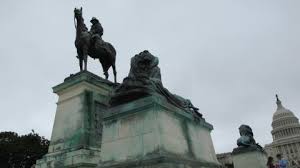
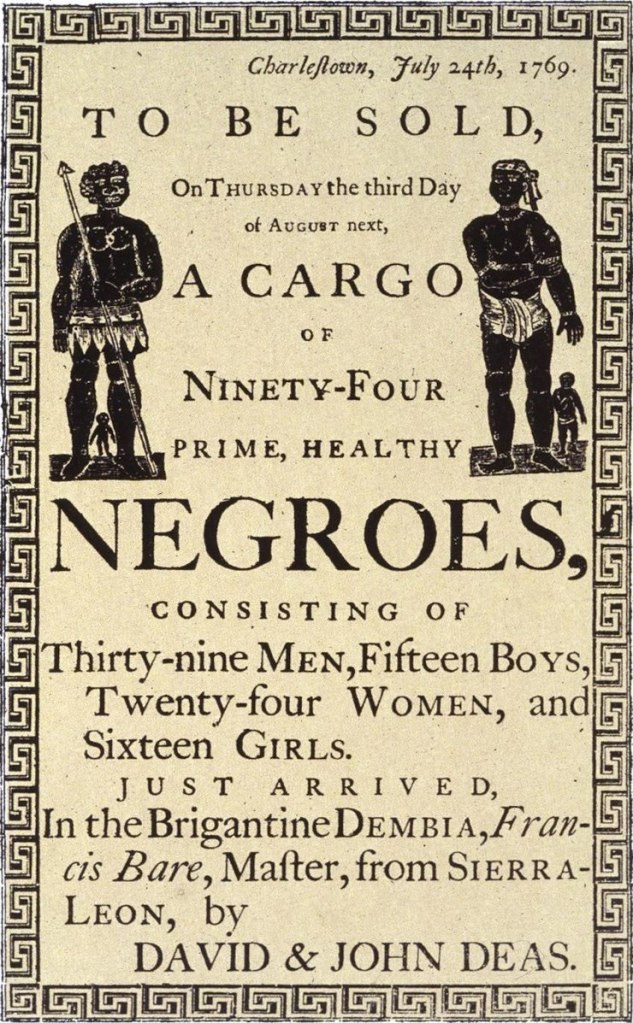
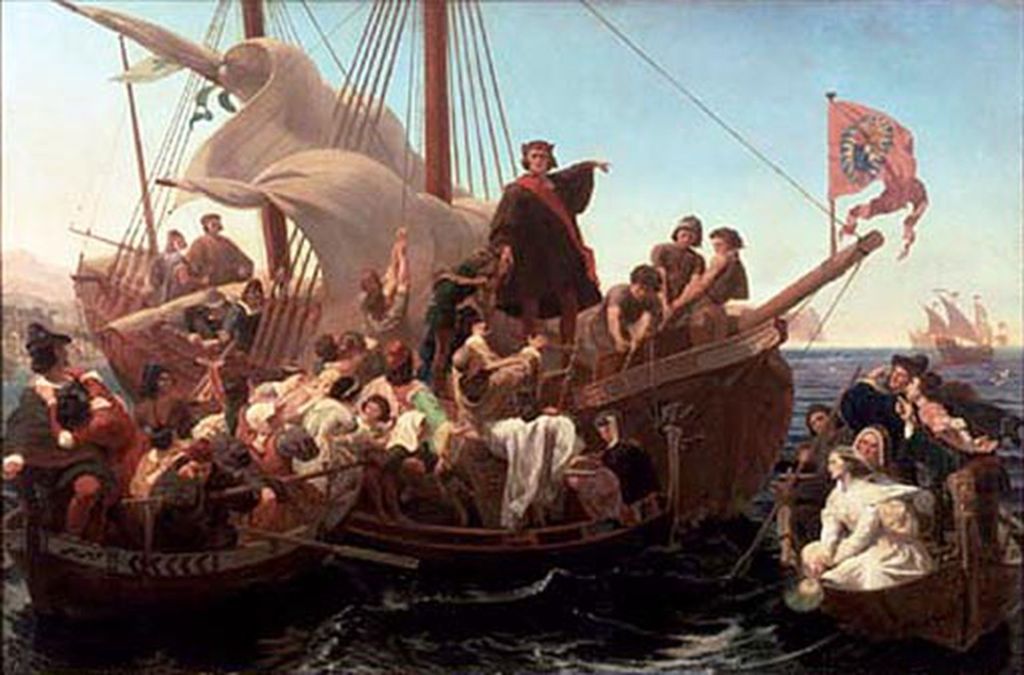
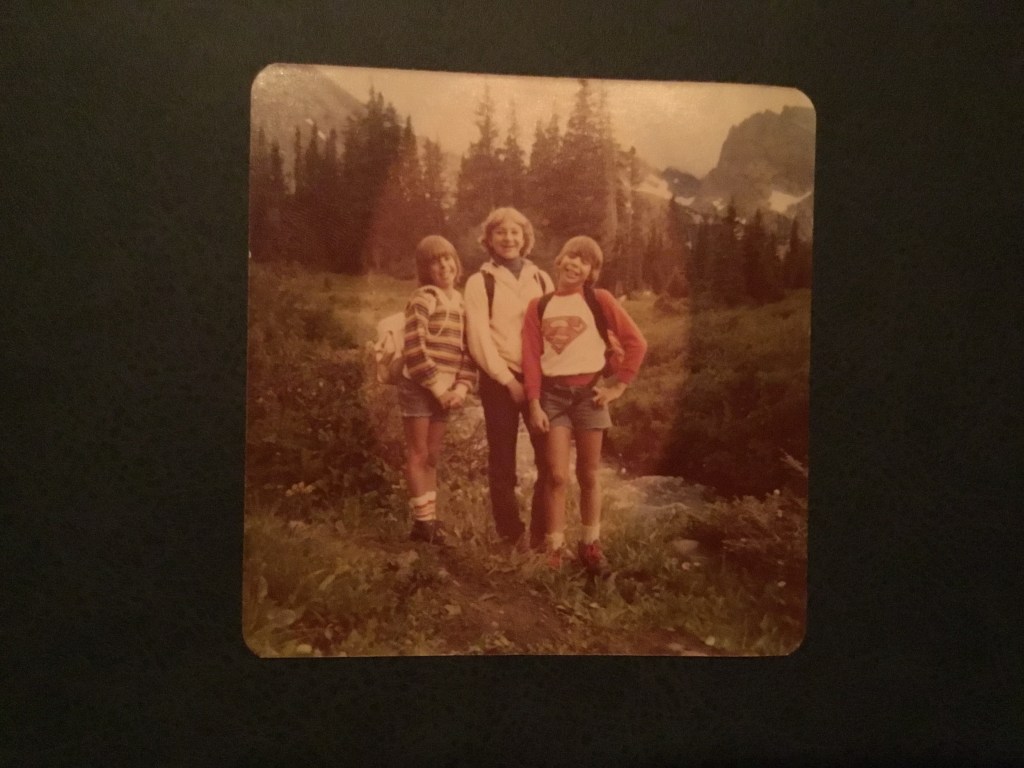
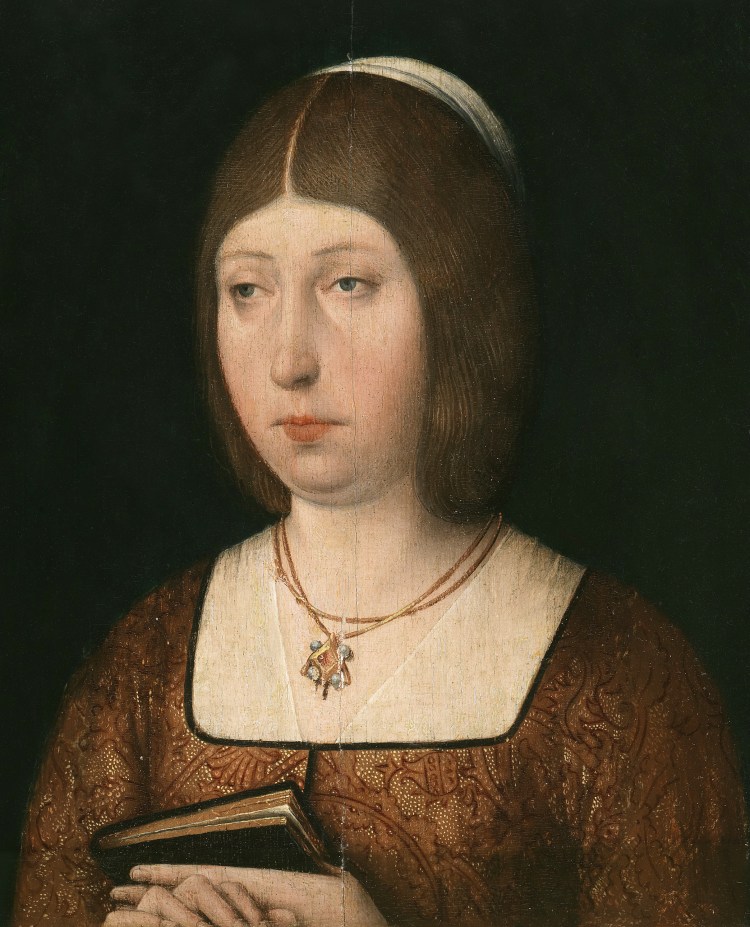
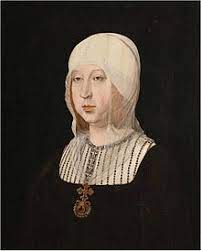

 The American Slaveocracy Revealed